
The Dopamine Chase
When doing more leaves you feeling less.
Why the season of joy leaves your nervous system wrecked.
Every year, the same thing happens.
We tell ourselves this Christmas will be different - calmer, more meaningful, less chaotic.
But before we know it, we’re back in the same loop: overspending, overcommitting, overdoing. By the time January and back-to-routine rolls around, we’re exhausted.
Why? We’re doing Christmas on autopilot — driven by pressure, expectation, and habit — and calling it tradition. We call it festive, but our nervous systems call it chaos.
It’s not just the shopping lists or family tension. It’s what’s happening inside your brain.
Every light, sale, and notification fires a hit of dopamine (the chemical that fuels reward and craving). We end up chasing “more” thinking it's “joy”, but really it’s our body overstimulated.
This year, why not switch OFF the auto mode and choose to wire it differently. Not by adding more, but by doing less. Approach the season for renewal. As an opportunity to slow down, simplify, and learning to find satisfaction in smaller, real moments.
— Because if nothing changes - nothing changes.
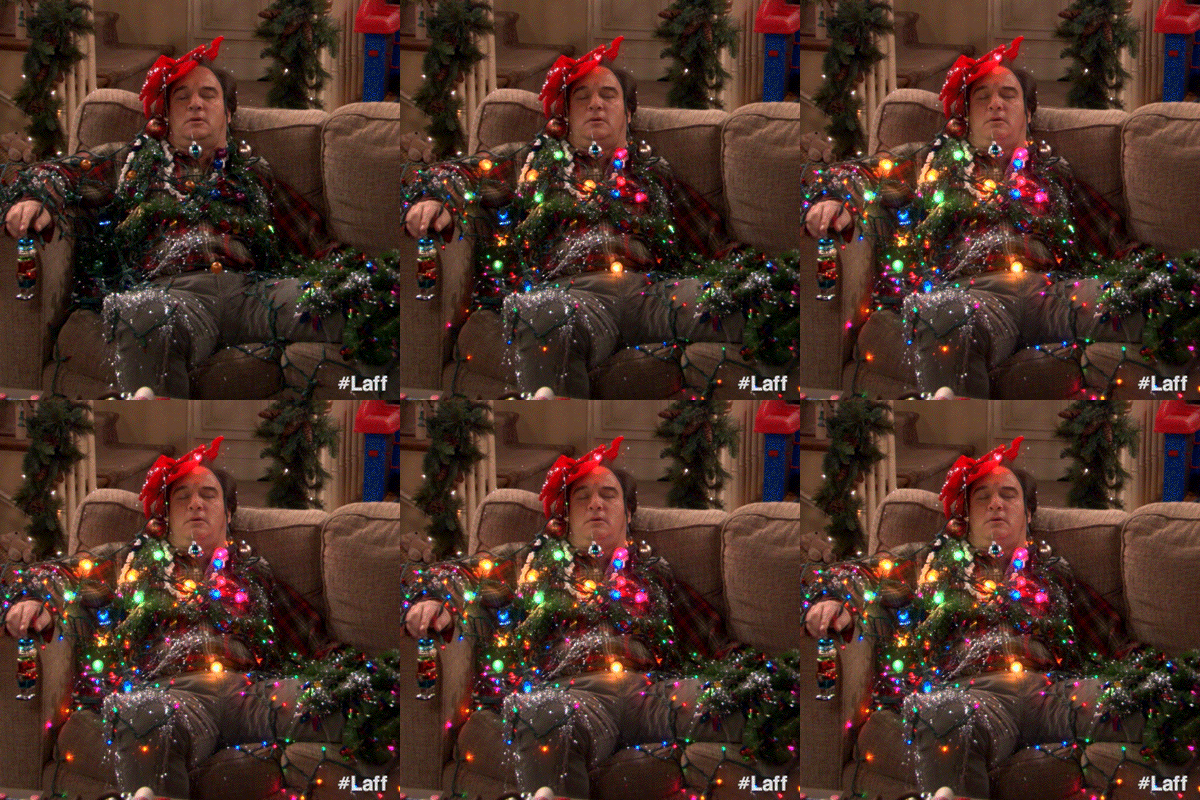
When Festive Became Frantic
Somewhere along the way, Christmas stopped being about connection and became a performance. We traded meaning for proof — proof we’re doing well, coping well, living well.
We’ve built a culture that mistakes excess for joy. More lights. More gifts. More plans.
Because if we slow down, we might have to feel what’s underneath the noise.
We tell ourselves it’s about family, but it’s often about control — managing perception, meeting expectations, performing happiness. We’re so used to chasing big, shiny highs that we’ve forgotten how to feel the small, quiet ones.
We’ve raised our threshold for joy so high that ordinary moments barely register. The warmth of a morning coffee. The sound of laughter. The stillness after lunch.
Those used to be enough.
Now they feel like nothing.
Not because life got worse, but because we’ve desensitised ourselves to the small stuff.
Psychologists call it hedonic adaptation.
I call it emotional inflation — the cost of confusing stimulation with satisfaction.
The problem isn’t that we want too much. It’s that we’ve forgotten how to want simply.
The Science Behind the Crash
Your nervous system was never built for this much input.
It’s wired for rhythm — bursts of activity followed by deep rest.
But modern life doesn’t give it that balance.
Every ping, post and party floods your body with dopamine and cortisol — pleasure and stress in the same hit. That’s why you can feel excited and exhausted at the same time.
Pleasure and pressure have merged.
Over time, the brain becomes less sensitive to real reward. You start needing more stimulation just to feel normal. That’s addiction physiology, not lack of discipline.
By December, most people are running on adrenaline and calling it energy. Then January hits, and we feel heavy and don’t understand why. We feel we are failing but really it's our nervous system finally resting.
PS in practice
If you actually want to feel different this year, stop trying to fix Christmas.
You don’t need a better plan — you need a different pattern.
Lower your threshold for joy.
Joy isn’t hiding in the big moments. It’s in the small ones you rush past — the smell of rain, the first sip of coffee, a real conversation.
Stop calling them small. They’re your nervous system’s reset button.Quit the chase.
That next post, plan or purchase isn’t happiness. It’s anxiety dressed as productivity.Guard your attention.
Your dopamine doesn’t know the difference between scrolling and shopping. Either way, it’s hooked.Let it be messy.
Stop performing calm. The nervous system regulates through honesty, not perfection. Connection doesn’t need choreography.Rest before you hit the wall.
Recovery isn’t a reward. It’s survival. You can’t show up for anyone if your body’s still bracing.
The PS Point
We’ve confused stimulation with celebration.
Your nervous system doesn’t care how good your tree looks or if you have perfected the latest nibbles platter.
LET IT GO.
Real joy isn’t something you create — it’s something you notice.
So this year, ask yourself:
What if you didn’t push through?
What if you didn’t overfill your days or overthink your moments?
What if peace was the point?
Lower your threshold for joy.
That’s where calm finds you. In the moments you finally slow down enough to feel them.
WANT TO KNOW MORE?
Book:
Daniel Z. Lieberman The Molecule of More
Anna Lembke Dopamine Nation: Finding Balance in the Age of Indulgence
Talk:
Chris Williamson - Can little things make your day?
STILL SPIRALLING?
Let’s work together to get clear on what deserves the effort and what is taking you away from your true joyful moments.